

Flavio Bisciotti explains (Invisible Cities) to editor-in-chief Janice Bremec Blum
By Janice Bremec Blum
Photo: Francine Yang
This story has been updated from its previous version.
When life gives you lemons, you make lemonade. When life burns down your atelier, you make art. Such is the case with Argentinian, Flavio Bisciotti. It was back in early 2016 when an electrical fire stole Flavio’s studio but it ignited a new spark within this Venice Beach artist to create, along with a group of other artists, the highly successful show aptly titled, Palimpsest, meaning: something reused or altered but still bearing visible traces of its earlier form. Each artist took pieces from the rubble and gave it a rebirth. Coming off of the success of that show, Bisciotti has some fresh, new ideas telling me, “The fire was the starting point.”
“I’ve been painting all my life but I never showed my work. I wasn’t ready.” Say’s Bisciotti, adding with irony, “I didn’t have the fire.” With a background in architecture, Bisciotti has always felt confident in telling people he’s an architect but not an artist. “If you’re an artist you sell your art, but I studied architecture so I always considered myself an architect.” But like the studio fire that melted things together, the fire within Bisciotti is melting together his passions as he works on his new project titled, Invisible Cities: a series of paintings with an architectural flair. “I’ve always been attracted to buildings. When I visit new cities, I take a lot of pictures of buildings and focus in on the details.” And it is these details that you’ll find in Bisciotti’s latest collection.

Flavio’s artists tools and paintings
Strewn on the back wall of his cleaned but not yet renovated studio, is a huge canvas, almost the size of Picasso’s Guernica, where Bisciotti is working on a currently untitled piece for his Invisible Cities collection. The painting is awash with blues and yellows and, of course, buildings. Iconic structures such as New York City’s Chrysler Building, as well as some edifices from his native city, Buenos Aires. “If I’m making something that is a modern city, I want to bring in some kind of tradition or drawing into the same piece.” Within the buildings are decoupage pages of architectural drawings from an old text book that was salvaged from the flames. “For me, my paintings have to have visual balance. I want you to look at a piece and continue looking at it to try and find more details.” And yes, it does make you want to take a step closer to examine the intricacies of this painting in process. “I try to find in my work a conversation, a connection between the painting and the people.” As the painting progresses, Bisciotti added a strong rust reddish line dividing the new development construction, tall buildings, and the old and short architecture. “It’s like a paradox between the old style of small scale living versus the new, larger style of modern typology.”

Flavio Bisciotti’s Artists tools
Bisciotti, who claims to work better when he’s on a deadline, is furiously finishing this painting that will soon grace the walls of LA’s Pacific Design Center. “Deadlines help me to focus more on the piece.” When putting together Palimpsest, to meet that show’s deadline, Bisciotti worked 45 days straight, non-stop. “It was great!” He says with a nostalgic smile, “I can’t believe I did that!”
When I asked about Los Angeles’s place in the Invisible Cities collection, Bisciotti tells me that when he first moved to Venice beach, “I had the feeling that it was missing something.” Having visited older, European cities like Buenos Aires, Berlin, and Barcelona, what was missing from Venice beach were building details. “There is the sun, the surf, and the beach, but there are no gargoyles!” He says with a laugh.
But after 27 years, Bisciotti has found his peace here as well as his overall love for the City of Angels, “The climate!” he says with raised shoulders and a pleasing grin, and, of course, I whole heartedly agree. With his background as an architect, he feels strongly about our city’s advancement. “I’m against developing in the wrong way like not considering the environment, the neighbors, or the city itself.” He fears that the growing expansion of downtown Los Angeles is, perhaps, happening too fast thereby not heeding attention to the heart of LA. “They are making New York City in Los Angeles. LA has its own character.”
Bisciotti finds the beauty of art everywhere. “It never ends,” he says. His studio fire, albeit devastating, was the force that has propelled him in a new direction. “The fire made me open my eyes. It made me look back at what I did in order to look ahead to the future.” Bisciotti’s goal now is to complete his Invisible Cities collection and have a showing of his work that, he says sternly, “has to be approved by me. I’m getting there!” Being privy to his paintings even in their early stages, I have to disagree with Flavio Bisciotti’s inner critic. From what I can see, he’s there!
Contact Flavio at http://fab-gallery.com
Here are a few videos of Flavio at work…
Recommended
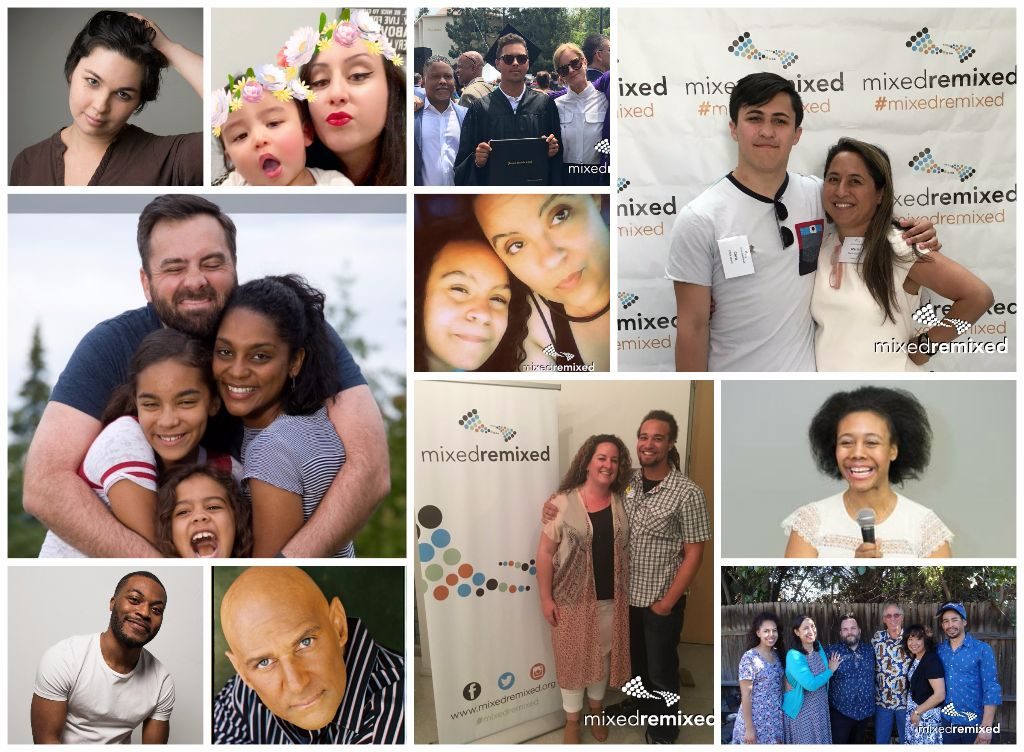
The Mixed Remixed Festival on June 10th, Downtown-LA celebrates stories of multiracial Americans and families, the fastest growing demographic in the U.S.
Globalization and multiculturalism is not just foreign policy or trendy fusion restaurants; for a growing number of people, it is in their DNA. Reconciling two cultures can be nearly effortless, but for most it takes years of introspection and struggle to find a balance that works. All mixed relationships and individuals are the sum of its parts, and this collective mixed experience of accepting two cultures, learning to connect these puzzle pieces, and creating a cohesive identity is what binds these individuals together.
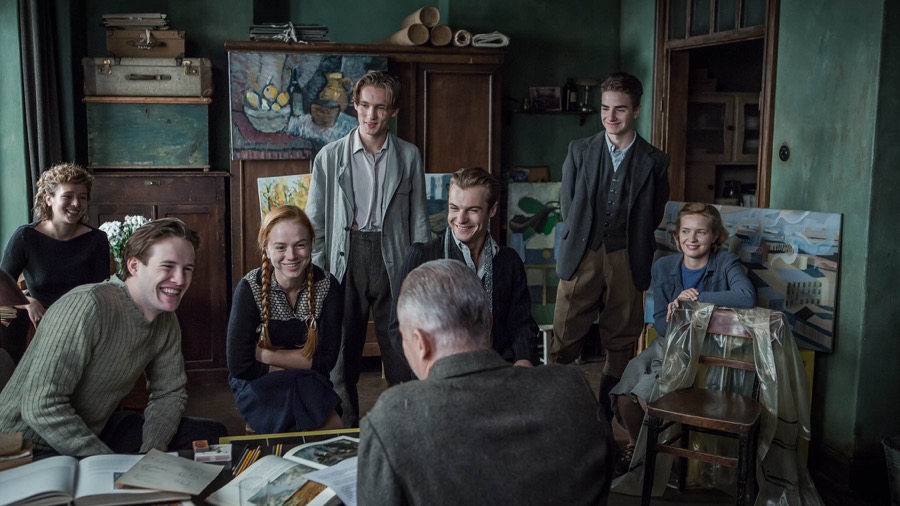
A political filmmaker’s swan song chronicles a haunting close to an artist’s life
When film publicist Sasha Berman sends something over, we pay close attention to her indie films, which have artistic characteristics different from U.S. films — a certain rawness. They are culturally based, provative, and the subtitles give the film an even more intriguing perspective, as we found it so with her most recent premiere, AFTERIMAGE. Los Angeles Times film critic Robert Abele had this to say:
Andrzej Wajda’s “Afterimage” feels vividly connected to the Polish auteur’s beginnings, yet also acts as the kind of haunting close that sums up a life.

When it comes to Jazz Icon Miles Davis, Cool really is Forever … Happy Birthday Sir Miles!
Sir Miles Dewey Davis, III was not only one of the greatest jazz musicians that I know, but he was also a renowned visual artist highly regarded for his paintings and drawings. Happy Birthday MILES! The entire Miles Davis Festival experience is one that I will always remember. It not only featured Miles’s nephew Vince Wilburn, Jr. and Barbara Morrison, but also Herbie Hancock, Wayne Shorter, Clark Terry, Russell Gun, Phil Perry, Jazz Edge, Young Lions and local talent. It was a 12-hour back-to-back jam session filled with music, poetry, and dance. The city was floating until midnight as Ahmad Jamal worked his magic on the keyboards punctuated with jazzmick and contagious rhythms that Miles Davis would gladly approve, having been a fan of Ahmad’s work.
